Saturday, May 27, 2006

a pizza experience

Late last October my Mom and her fiancé, Charley, took me out to dinner. We went to Caffé Umbra, a fun little restaurant in the South End of Boston. It was not even two months after being hit by the car; I was dependent on crutches and a bulky knee brace and only just lucid enough, post-skull-fracture, to comprehend the significance of my injuries.

I remember feeling extremely nervous. My heart fluttered as we drove together to the restaurant. It was the first time I had done something “normal” – the first time I had ventured out into a public, social situation while injured. I was afraid that people would stare at me; I was terrified of attention. I was scared that being in a restaurant would make me sad, truly hammering in the consequences of my loss of smell. I was afraid of entering the familiar culinary environment and suddenly seeing how quantifiable the post-accident changes truly were.

Charley let my mom and me out on the sidewalk in front of the restaurant before he parked. One glance at the small, dimly lit bustle of the dining room made my stomach sink in apprehension. The tables were close together; walking with crutches would be difficult. There were lots of young professionals, fancied up in suits and dresses and sipping drinks at the bar, independent and healthy. Though shy in high school and perhaps (quite) awkward in junior high, I have not had any problems with confidence or social comfort in a long while. But hobbling through the dining room that night, my mom’s hand constantly hovering at my back, the hostess having just helped me climb out of my jacket while I balanced precariously on one leg, I could feel my self-conscious teenage angst creeping steadily out of my ears. No one really looked at me. Even if they had been, there was truly nothing to be embarrassed about. Being young and on crutches is a common occurrence. My cheeks were burning none the less.

But then we sat, my crutches nestled inconspicuously in a nearby corner. My mom and I faced Charley, our backs to the wall, with a full view of the crowded restaurant. The air was peppered with laughter, low tones of deep conversation, loud greetings and the whispered clink of forks and knives. Pomegranate martinis were placed in front of my mom and me, bright purple. I began to feel more comfortable. Charley, would of course never drink something so girlishly colorful, and his glass of Chianti tapped our sweet drinks as we smiled, cheers, happy that we could finally all be out of the house together.

I don’t remember what we ate. I can only recall the vague taste of martini -- like sugar water with a tang, any sort of nuance lost in those early stages of my olfactory regrowth. But the food itself wasn’t the important part. As we sat and talked, eating and drinking our way through a few hours of the evening, my awkward self-consciousness melted away. Perhaps because of the strength of thesaid martinis, yes. But also because, after those few initially awkward moments, I was finally able to look beyond my fear of injury and change. And I remembered that I love all things culinary for a reason -- a reason beyond the subtleties of flavor. Beyond qualifications of the chef and quality of ingredients. Food brings people together – the obvious happiness of those in the restaurant, patrons leaning cheerfully over their plates, sharing bites, laughing into delicate glasses of wine. People dressed nicely, together, bonding over the shared experience of a meal. I had fun for the first time in months that night. My mouth muscles, the ones used for smiling, reasserted themselves back into my physical repertoire.

Recently I’ve been sad about my less-than-full ability to taste. I’m at a plateau, recovery-wise. Completely healed, it is only the lack of smell that lingers in this tumultuous year of change. I’ve been struggling with what I want to be doing with myself and my writing. I’m in a rather constant state of confusion. But I’ve realized that the confusion may not dissipate for a while. And in coming to terms with that, I am now more fully aware of the other things, many other things, that there are to concentrate on. I’ve been happily reminding myself, now that I’m feeling more settled in my new home, why I love the culinary. Taste was a part of my kitchen-love, of course. But certainly not the only part. It’s a matter of exploration and fun. The way food brings us together and inspires universal pleasure.

For example, one night this week my friend Colin and I took a romp from our Park Slope stomping grounds deeper into the realm of Brooklyn. We were on a quest for pizza. The best pizza. Di Fara’s Pizza. And fresh off the Avenue J stop off the Q train, I found myself turning in circles searching for some visual confirmation of the well-lauded pizzeria. Perhaps I expected some kind of spotlight, bright neon sign – fireworks? Singing elves? Something to loudly advertise the amount of wonderful hype I’ve been hearing about this little nook-ish restaurant. I saw only a calm, quiet neighborhood; there was nothing out of the ordinary. I was ready to pull out all my pizza-radar equipment (though, in reality what that involves I have no idea – maybe some kind of magic wand slash scuba diving mask) – when I noticed Colin staring at me, eyebrows raised.

“It’s right here, Molly.”

“Oh. Right.” I looked up, right in front of us, and saw the simple faded sign. Di Fara’s Pizza.

Di Fara’s is contained in a small, bright little room – a tall counter separates the few tables from the oven area. Domenico DeMarco, a slight, older man with gray hair and a green plaid button-down shirt, lorded unassumingly over the pizza dough and the ovens. He wore an apron and exuded an aura of calm. His slow movements were deliberate, delicate and perfectly executed. A light rhythm of guitar chimed in the background, twinkling of old school Italian. The walls were covered with articles about his pizza.

Colin and I watched Mr. DeMarco work (after ordering our cheese pie) as we sat at a small corner table. One pizza at a time; there is nothing fast involved in this food. It deliciously slow. Colin and I had stopped by a neighboring convenience store and had crisp, cold beers to entertain us as we waited. Still in their paper bags, we drank them with straws (Yes the straws were a strange twist, I know. But somehow that straw turned it into the perfect pizza-beer. More perfect than a normal pizza-beer. Don’t ask questions, just believe me.)
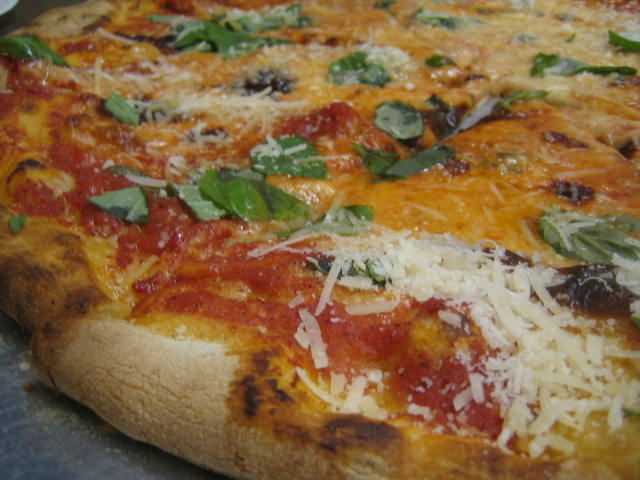

Our pizza came to us, an hour later, piping hot, thin crusted with twinges of burnt crispiness on the edges. Bubbling melted mozzarella di bufala over the thick red sauce (homemade multiple times daily, I hear). We watched – Colin practically clapping his hands, seal-like, in pizza-glee – as Mr. DeMarco drizzled olive oil and carefully snipped the leaves off a fresh bunch of basil over the pie, finishing it off with a smattering of hand-ground Grana Padano cheese to sprinkle over. We ate until it felt like death was knocking at the door – the pizza slices fairly melted down my throat. The Di Fara pain is a good one though. As pleasant as an over-eating pain could possibly be.

It’s true that I can’t taste every aspect of this pizza (or any food) fully and completely without smell. But that isn’t the draw of this experience, even. It is the feeling of a lovingly made pizza practically dancing in your mouth, soft and crunchy, salty and sweet. It is the olive oil dribbling down the corner of your mouth (“Now that’s cute, Molly,” said Colin, “beer with a straw and oil dripping down your chin. Classy.”) It’s the adventure of a new neighborhood, new food and new friends.

We slunched ourselves, full to the brim, to the subway for our ride back home. [‘Slunched’ isn’t a word, I know; but I do feel it accurately portrays our state of being at that moment. You can’t just ‘slump’ if you are that full.] Colin was cold, an unusual occurrence for him, and I made the astute observation that all the blood generally keeping him warm was in his belly, working on the pizza. I suppose that if instead of on the subway on a warm spring night we were somewhere out in the unprotected open wilderness in the middle of winter for a long time, this pizza-induced-cold might have been dangerous. But what I really think is that the human body does have its priorities straight. If I had to choose between basic body function (such as temperature control) and an evening of Di Fara’s pizza – I would probably choose pizza. That’s why they invented the jacket.
Friday, May 12, 2006

another beginning

It has been eight months since I lost my sense of smell.

There are certainly moments when I am positive it will never come back. My olfactory neurons seem to aggressively advertise their stagnant growth with silence.

I can clearly imagine myself at eighty-five, stooped and wrinkled, hair white as snow, baking cookies with my young granddaughter. Right before we take them out of the oven - golden brown, glistening pools of melted chocolate – I’ll lean towards the small girl and say in my creaky old voice, “When I was a little girl, about your age, the smell of baking cookies was my favorite. It always reminded me of Christmas; it smelled like school vacation. I can only imagine it now.” I will have a far-off, nostalgic gleam in my eye. And the little girl will just smile at me, confused, her batty old grandmother.

The fact that I actually do imagine myself (with vivid dexterity) as a gray-haired grandmother is slightly disturbing. So is my apparent penchant for wild exaggeration. Because the truth of the matter, when I take a small step back and view my sense of smell with a hint of reality, is that things are getting better. Slowly, almost so sluggishly it is impossible to tell if I am hallucinating.

I got a whiff of Spring the other day. I walked outside of my apartment building and most decidedly, concretely, could smell Spring. I couldn’t put my finger on any of the scent-details that were once so familiar - the freshly cut grass, perfumed budding flowers, a sweet warmth in the breeze – but I knew they were there, hiding under the inexperience of my regenerating olfactory neurons. The strength and depth of smell is not there; it was a simple baseline of Spring. But it was something, something concrete.

Beyond the distinctively sharp, recognizable scents I have had back for a while (chocolate, cinnamon, citrus, laundry, herbs, wine), I am now gaining a general sense of “scent.” Unknown and indescribable. But, I think, infinitely more hopeful. Even lacking the subtleties and nuance that give scent a name – there are smells, constantly. I find myself walking into a room and with a slam, my nose registers something. Something indefinable and weak. But it is something. I will say, confused, “What does it smell like in here?” And whomever I am with often looks equally confused, sniffing, and says ‘I don’t know… nothing much.”

I had almost forgotten that there is scent everywhere. It is easy to forget the universality and continuance of smell when you have it. The subtleties are so common they are literally unnoticeable. Every room, everywhere, has an individual smell. Temperature, too; warm has a smell, as well as cold and wet. Their baseline scents are different than their physical feeling. And the difficult thing for me at the moment is that I don’t have the words to describe them. They are registering in my nose with such a weak hum that it is more of a feeling, an idea, than a smell. But at the same time, I know that it is the beginning step to a full scent palate.

The only way I can describe these new delicate smell-ideas is to say that they make me feel alive. It is surprising how quickly I forgot that these universal scents ever existed, as I myself have existed in an odorless world. But the memory, however feeble the actual smells coming back, gives me the momentum to step out of black and white and into a world of color. Or at least sepia toned. Small steps, moving in the right direction. There are hints of a newfound vibrancy lurking everywhere.

***

On another note, it has been one year today since I began writing My Madeleine. The past year has been the most difficult and, simultaneously (the realization has been slowly dawning on me, though, I suppose that is another story in itself) the most beautiful of my life. I am very happy to have documented a great deal of the change here; the process of writing through it all has helped me in an infinite number of ways. So thank you, all, for reading.

Monday, May 1, 2006

a brief return to boston

On Thursday morning I lugged my huge suitcase down the two flights of stairs from my apartment to the sidewalk. With each lopsided step the suitcase bounced against my leg; it was a fight to keep from falling face first down the stairs. Coupled with the gigantic backpack I had somehow managed to stuff with every possible item under the sun (did I really need 6 different books for my four days in Boston?) my balance was widely off-kilter. Once on the ground I rolled the case behind me as I walked to the subway, leading like a tugboat of sorts, silently berating myself for agreeing to deliver this monstrous suitcase to my mother in Boston. She is going to London; she likes to pack a lot. By the time I awkwardly bounced myself down onto the F train, up the stairs at East Broadway, and down the few blocks of Canal Street to the friendly “Fung Wah Bus Station,” I was covered in sweat. After hectically throwing my money ($15.75; best deal ever) in the tiny glass window to get my ticket stub (handwritten on a scrap of paper) I lofted my suitcase (with a combination of arm raising, back bending and a few aggressive karate kicks) onto the luggage platform of the bus and collapsed into my seat, hot, sweaty and tired. I promptly fell asleep, wading through hazy dreams of subway trains somehow supplanted into the office of the magazine I am currently working for alongside some spinning cherry trees in full blossom, an old friend from elementary school and a series of shooting firecrackers launched from a rooftop. Strange dreams; I’ll blame it on the loads of allergy medication I need to take this time of year in order not to sneeze my nose off. I woke up when we reached South Station in Boston somewhat disoriented, but happy to be back, however briefly, in such a familiar land.

My mom and I walked to a local French bistro that night and had a glass of wine (or two) together while we ate fresh pea soup, vibrantly green with a pool of white crème fraiche in its center, grilled calamari and spicy chorizo. We talked about a lot of things: my new life in New York, hers continuing in Boston, future trips, plans, the excitement of my little (well not so little; 6’3 varsity lacrosse playing) brother spending the summer in NYC as well. And simply the strangeness of finding myself back in Boston, even if for only a few days, after my first two months in New York. I am beginning to feel comfortable in Brooklyn – like I live there and it may possibly one day be called ‘home’. In Boston it seems as if in every corner there lurks a ghost of my former, injured self. Driving to the grocery store there is a girl on crutches sitting in the passenger seat next to me; she winces whenever we go over a bump. Riding the T I brush hands with my shrunken self, the one wearing a large black knee brace, as we simultaneously grab the handrail. The kitchen reverberates with the sound of my cane and when I walk into my bedroom I leave behind a woman who is not able to climb the stairs to reach it. It’s amazing what only two months away can do to change your mindset. New York is good for me. It is wonderful, however, to be back at home for a weekend and see my family.

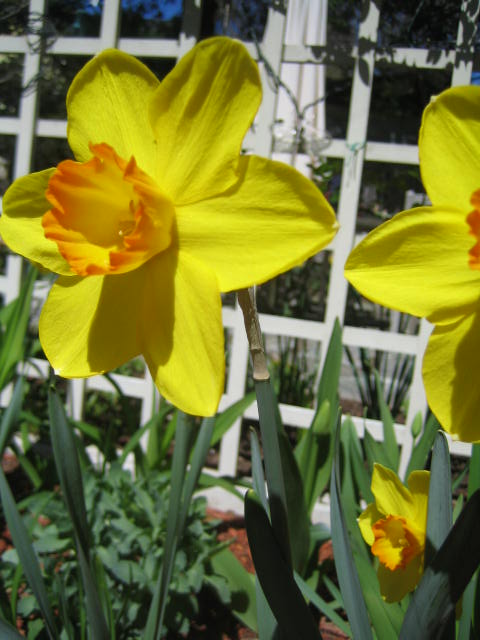
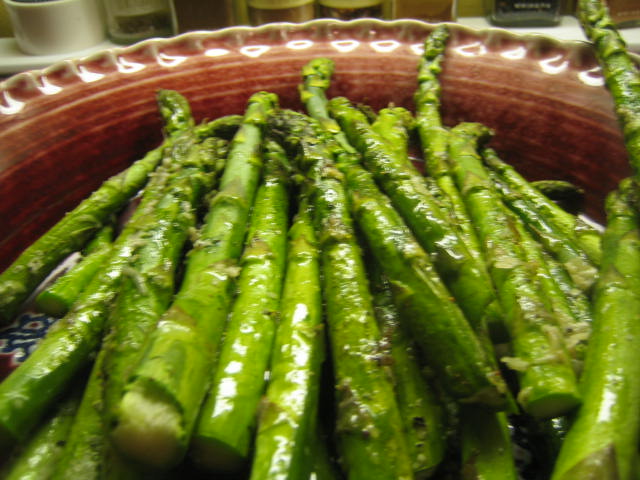
And Friday night I again took the helm of the kitchen and cooked dinner for my mom and her boyfriend Charley. I think they miss having an enthusiastic personal chef around the house; I certainly miss their standing mixer and Cuisinart (maybe them, too). I made a simple meal from the Balthazar Cookbook: mustard glazed salmon and earthy lentils, roasted asparagus with parmesan and a toasted vanilla pound cake with strawberries. It was very spring, fitting well alongside the yellow daffodils winking through the kitchen window. And comforting – to cook, to eat, to be back home, and to know how far I’ve come.

Mustard-Crusted Salmon
Adapted from the Balthazar Cookbook

6 salmon fillets
1 ½ tsp salt
½ tsp black pepper
¼ cup Dijon mustard
6 tsp dry bread crumbs
2 tbs vegetable oil

-preheat oven to 500
-season salmon with salt and pepper. On top, spread 2 tsp of mustard and a sprinkling of bread crumbs. Press the crumbs into the mustard with your fingers.
-heat oil in large sauté pan, when it begins to smoke, add the salmon, mustard side down and lower the flame to medium. Sear for 2 minutes, until there is a crust. Flip for one minute and then transfer the pan into the oven to finish cooking for 3 minutes.
-Plate on top of the lentils


Lentils:
Adapted from the Balthazar Cookbook

1 cup green lentils
2 slices diced bacon
4 sprigs thyme

½ medium onion, diced
1 minced garlic clove
1 tsp salt
2 tbs unsalted butter
1 medium carrot, diced
1 celery stalk, diced
¼ tsp white pepper.

-rinse the lentils in cold water and drain. Put them in a sauce pan with 4 cups of water and bring to a boil. Simmer for 20 minutes.
-meanwhile in another saucepan, sauté the bacon and thyme for two minutes. Add the garlic, onion and salt and sauté 5 minutes. Add butter, carrot, celery, white pepper and one cup of water and boil five minutes.
-drain lentils and then put them back in their pot. Add the vegetable mixture and simmer 10 minutes. Serve under the salmon.

Roasted Asparagus with Parmesan:

Asparagus
Olive oil
Salt and pepper
Handful of parmesan cheese

-preheat oven to 500.
-toss asparagus with olive oil, salt and pepper.
-roast 7 – 10 minutes, until fork tender.
-throw the parmesan on top, while hot, and serve.

Tuesday, April 11, 2006

The State of the Fava

For those on the shipping and receiving crew, there are boxes to unpack in the produce area.

The omnipotent intercom-voice directed; I obeyed. It was my first shift as a working member of my local Food Coop.

I unpacked and organized boxes of bright oranges, radishes, banded bunches of asparagus, a vivid color differentiation of beets, soft loaves of bread, multitudinous buckets of cottage cheese and yogurt. I swept up the remains of spilled farro wheat, rolled oats, and red lentils. I stood on a little step stool in order to crane my too-short body over the edge of the top shelf to rearrange more packages of rice cakes than I ever knew existed.

Are there any workers in the shipping and receiving crew who feel comfortable handling raw meat? Calling all non-vegetarians; we need meat handlers.

In the apparent dearth of carnivorous coop members, I had the opportunity to spend a long time unpacking cool chicken carcasses wrapped in plastic. Thighs, drums, legs, breasts; I organized all organic body parts with my small band of fellow meat-eaters. Grass-fed beef steaks, short ribs, stew meat. Racks of lamb. Pouisson. Tiny capons. Pates and smoked delicacies. Duck and Turkey. A ready phalanx of diverse and organic meat showered itself into the shelves as we organized. I entertained myself thinking on the deliciously endless cooking possibilities.

The hours of menial labor were pretty boring. But worthwhile, certainly. I am happy to have a nearby organization of people who care about the quality and diversity of their food. I am delighted to have things like Meyer lemons and blood oranges available at an affordable price [especially since it seems that I have zero grocery store self control]. And not only has it inspired a few interesting new acquaintances [how many Passover Seders can a girl actually go to?], but has also given me a root-like sense of community, important in this new city.

At one point in my shift, as I waded through the swamp of vegetable containers in the produce arena, my gloved hands ripped open a damp cardboard box. The contents were covered in a sheet of white paper; I could see a hint of green in leafy protrusions on the side. But it wasn’t until I crinkled and tossed the paper into the nearby trash that I fully realized what, in fact, I was dealing with. Fresh fava beans. Bright green, slightly fuzzy. I hadn’t realized they were yet in season; the large pods contain the delectable crunch of spring.

As I tossed the beans into the bins in the produce section of the Coop I was immediately back in The Restaurant. It has been almost a year since I worked as a dishwasher at the intense Boston bistro in a (sadly, aborted) attempt to work my way up the line of the culinary world. On one of my first nights working in the kitchen, I was thrown in front of a monstrous pile of fresh fava beans. I had never seen them in this unpeeled state before. My co-dishwasher S. and I spent a few bonding hours together as we pierced open the thick outer pod and freed each light green bean with our fore-fingers, tossing the edible nubbins into a metal dish.

No matter what the exact hour, as I peeled those favas for the first time I was most likely covered in chicken stock, my white staff shirt stained with beet juice and a smidgen of chocolate, my hair a detached frizzy mess on top of my sweating head. That was my usual state of things. I did not yet have such an extensive knowledge of kitchen-Spanish and probably mumbled in an odd mix of Italian and English as I attempted to converse with S. I vividly remember, however, looking at the piles of bright empty pods and bowls of fresh cleaned beans. I wondered how they were cooked, how they tasted, and how The Chef would use them. I imagined the smiles of the eager restaurant patrons as they drank in the sight of the vibrant green favas with their eyes, their steaming plates set carefully in front of them. We did that kind of prep right before the first big wave of dirty dishes of the night; I remember feeling very happy.

I bought my own little bag of fresh fava beans before leaving the Coop on Saturday. And last night I peeled them while sipping a glass of red wine, relaxed and chatting with my apartment-mate. I worked slowly, relishing the crunch of the open pod, the delicate color of the inner bean. I blanched them in a pod of salted water and then quickly slipped them out of their outer membranes. In a salad of plump farro wheat, fresh cherry tomatoes and arugula, dressed simply with olive oil, red wine vinegar and salt and pepper, the fava beans were a bright addition.

The fava beans were a vivid reminder of where I was a year ago and simultaneously a token of where I am now. No longer am I entrenched in the culinary world; I am finding my way in the confusing mash of NY. I’ve been sad, these days, as I watch my life continue in a path that veers farther and farther from my original culinary plans. My days (however short) as a dishwasher were a concrete jump into a passion and now seem very far removed from my current existence. Today I am not ‘sure’ of anything, really. I’m having trouble thinking of a job that I really want. The majority of my physical body has recovered from the accident. I can walk comfortably with both legs. Run, even. (Well, nothing close to a sprint. But jog a bit when I’m running really late). I can sit cross legged and can again do a mean yogic backbend. The only lingering losses from the accident almost 8 months ago are my sense of smell and my professional convictions. And I miss them. A lot.

Tuesday, April 4, 2006

On the Birthday of a Dear Friend

It was a cool October evening, a whiff of rain lurking somewhere in the humid overtones of the night air. Adrienne’s brown hair whipped up in the frenzy of a sudden gust of wind while my raincoat ballooned out into a cape of gortex as we quickly moved down the marbled cobblestone street of a small Italian town, somewhere near the coast of Capri. I clutched my shoulder bag close to my body, checking the dark sky for signs of clouds obscuring the stars, impending precipitation. Lights were twinkling in the noisy trattorias and cozy cafes we passed as we walked; bearded Italian men and women, bronzed to European perfection, strolled nearby, tossing the light cadence of their language into our ears.

We landed at our destination, smiling – a single bench perched on a small hill. In a calm little park overlooking the cool flapping water of the Tyrrhenian Sea, Adrienne and I sat together, comfortable despite the hard wood seat. We opened my roomy bag and pulled out the bottle of rich red wine, two plastic cups and a bottle opener, a loaf of crusty white bread, hunks of white flaky cheese and mounds of fresh green grapes. Bright juicy tomatoes. We clinked our glasses in the cheers of happy travelers and attacked our wandering picnic fare with the same gusto that we often shared in those months of studying and traveling abroad. As the evening went along, always with the sound of soft waves breaking close-by, we ate, drank, and talked with the serious ease of comfortable companionship.

That autumn semester Adrienne and I lived in the same apartment, studying art history in Florence and exploring the Italian countryside in unison. It was a world deliciously far from the usual large lecture halls and musty libraries of our home university. Adrienne and I had not known each other in our first few college years, but when thrown serendipitously together in Italy we immediately found that we were kindred spirits. We hiked throughout all of Italy, picnicked at Pompeii, rode trains with large contingents of singing Italian soldiers, hitchhiked through a fit of giggles when we found ourselves stranded in a remote corner of the Tuscan countryside. Perfectly situated in our apartment right down the street from Florence’s Mercato Centrale, we cooked dinner together every night; Adrienne’s infectious laugh was always a delightful companion.

I don’t, actually, know what I would have done without her. I had arrived to begin my semester in Italy only a week after returning from Namibia, Africa. I had spent the previous three months as a volunteer English teacher in Katima Mulilo, a remote village on the Caprivi Strip. Coming from that intense experience of pervasive poverty, encroaching disease and little hope, Italy was a blaring shock to my senses. I was overwhelmed, to say the least. My post-Africa anxiety, I soon found, was all-encompassing. I felt guilty for who I had left behind; hesitant and wary of the unmitigated pleasures of my current situation.

On that cool and humid night near the ocean of Capri, one month into my Italian life, Adrienne listened as I talked about my experience in Namibia. It was the first time I had been able to verbalized what I was feeling. My fears, guilt, sadness over leaving the troubled African village to which I had grown so close. She listened that night; she listened consistently, continually, beautifully as I worked my way through all of the difficult emotions in the coming months, painful feelings I was not even aware I harbored until Adrienne’s gentle support allowed me to explore myself more deeply. Hours of involved conversation later, peppered, of course, with a plethora of fresh picnic food, we felt the sharp splash of rain drops landing on our cheeks as we looked up at the dark sky. A bright red umbrella magically appeared in Adrienne’s hand. Arms around each other and laughing with unabashed giddiness, suddenly free of tension and fear, we skipped up the hill back towards the hostel we were bunking in that night. Dark figures awash with the pattering of laughter, lost under a vibrant red umbrella.

***

On Saturday night Adrienne arrived at my apartment, a short ten blocks from her own, glowing in a bright flowered dress, funky cowboy boots. Her laugh, infectious as always, filled the room. Joined by other familiar college faces, we celebrated her birthday with a vivacious eating-fest.

For my first foray into ‘serious’ cooking since my move to New York, I indulged the vegetarian in all of us (though mainly our anti-meat friend, Grace) and made quinoa (one of my favorite things) with Moroccan winter squash and carrot stew, pomodori ripieni (roasted tomatoes stuffed with bread and cheese), and a voluptuous dark chocolate cake. The meal was warm and colorful. The smell of the chocolate cake as it baked lingered happily in my nose all evening. It was comforting and homey, fitting fare to celebrate the birthday of a wonderful friend.


We all gathered together on the rooftop of my apartment toward the later hours of the night, clinking glasses of wine and gazing at the sparkly view of Manhattan. Though nowhere near Italy and far from picnics of bread, cheese and grapes, when we stood there on the roof, none-the-less, I could almost hear the lapping ocean waves. Or maybe that was just the wine.


Happy Birthday Adrienne!


Quinoa with Moroccan Winter Squash and Carrot Stew
Adapted from Epicurious

Stew
2 tablespoons olive oil

2 onions, chopped
3 minced garlic cloves
1 tsp salt
1/2 tsp ground black pepper
1/2 tsp ground coriander
1/2 tsp ground cumin
1/2 tsp turmeric
1/2 tsp ground ginger
1/2 tsp cayenne pepper
Pinch of saffron
1 cup water
1 can diced tomatoes
2 tablespoons fresh lemon juice
1 medium sized butternut squash, peeled, cut into 1-inch cubes 2 cups peeled and cubed carrots

Quinoa
1 cup quinoa
2 tablespoons olive oil
1/2 cup finely chopped onion
1/4 cup finely chopped peeled carrot
2 garlic cloves, minced
1/2 teaspoon salt
1/2 teaspoon turmeric
2 cups water

1/2 cup chopped fresh cilantro, divided
For stew:
Heat oil in large saucepan over medium heat. Add onion; sauté until soft, stirring often, about 5 minutes. Add garlic; stir 1 minute. Mix in next 8 ingredients. Add 1 cup water, tomatoes, and lemon juice. Bring to boil. Add squash and carrots. Cover and simmer over medium-low heat. I let it simmer for almost an hour; the vegetables were soft and tender, a wonderful consistency. Season with salt and pepper.

For quinoa:
Rinse quinoa; drain. Sauté onion and carrot in the olive oil in a large saucepan over medium heat, about 10 minutes, until beginning to brown. Add garlic, salt, and turmeric and sauté 1 minute. Add quinoa; stir 1 minute. Add 2 cups water. Bring to boil; reduce heat to medium-low. Cover; simmer until liquid is absorbed and quinoa is tender, about 15 minutes.

Stir in half of cilantro to the stew. Serve with quinoa and more cilantro sprinkled on top.

Tuesday, March 28, 2006

A Close Encounter

I ran to the row of bright yellow machines perched in a dark corner of the subway station last night, credit card in hand, bouncing with awkwardly spaced skips through the crowded muddle of people. I was attempting to buy a metro card with unflappingly focused speed before the F train blew in on the track below me. I had just finished an educational but intensely busy day interning at an art magazine. It was late and I was so hungry that the thought of eating even my own arm was somewhat appealing. Unfortunately (fortunately?) I had on a bulky jacket and I could not reach the tender arm-flesh through my layers of winter cloth.

I made a beeline to the first ticket machine available in the row, sidestepping around a woman in a large, fuzzy black coat. She was grabbing her own yellow ticket out of the dispenser and turning quickly around in a jump to her own train; we could hear it vibrating on the track down below. I moved quickly aside, unreasonably annoyed that her physical presence could dare to possibly be in my way. I looked at her, radiating a frustrated vibe of overtired grumpiness (in what I like to imagine is a magnificently wilting, terrifying gaze) but immediately recoiled in surprise. I recognized this woman. It was Sara Moulton, executive chef of Gourmet Magazine and star of her Food Network show “Sara’s Secrets”.

In my post-accident, pre-New York and unemployed series of states, I have spent many an hour watching her on TV as she tames the seeming complexities of risotto or beef bourguignon. She has always struck me as a deliciously real person; never with the narcissistic, showy makings of a ‘celebrity chef’. Someone I could relate to as well as respect. Granted, I don’t think I’ve ever attempted one of her Food Network recipes myself, but those in Gourmet Magazine have been often well used and received. Instead of a manic recipe guru and larger-than-life cooking fiend (as I may or may not categorize other well-known chefs) I think I have viewed her more as (dare I say it?) a friend.

And so I was somewhat shocked last night when I found myself attempting to kill Sara Moulton with the death-rays of my gaze. She hardly even glanced at me, though, and certainly did not consciously register my presence. She ran quickly off to her train. We can all breath a sigh of relief; I didn’t kill Sara Moulton. I didn’t eat my own arm either. Overall, it was a largely productive evening.

Saturday, March 18, 2006

Familiar Smells

In a free afternoon last week I went to The Strand Bookstore, a beautifully large mess of books – new, old, a smattering of favorites and deliciously intriguing new reads. I wandered, browsing for a long time. Surrounded by books, the infinite possibilities of prose and poem, I am in my favorite state of being. Libraries and bookstores are my havens of comfort and stability. Even my room has an obscene number of books stacked in all corners, spilling over in large flows from my bookcase. Especially in times like today, when the concreteness of my own life is awash with confusion and ungrounded future, promise of the other worlds housed in literature beckons unavoidably. The Strand boasts to have “18 miles of books”; and I didn’t doubt it while perusing their crowded floor to ceiling shelves, cases, tables, nooks and crannies. It was the perfect place to go after a stressful job interview.

In the extensive time that I spent browsing there, I realized that there was something missing. Something I had not yet thought of yet all of sudden felt very acutely. I miss the smell of books. The musty aromas of old novels have always hinted of past people, places, and untold stories; the possibilities of getting lost in a book for me are intrinsically tied to a scent. A combination of sharp paper, clean ink, clouded leather and mildewed pages – an odor so easily imagined yet now quite unobtainable. I felt strangely dissociated in such a richly supplied arena of past and present, leather binding and rippled paperback, without that familiar scent. It was as if a part of the experience was missing; the striking odor of “bookstore” is one I had forgotten means so much to me.

The minor depression of the scentless bookstore didn’t stop me, of course, from buying more books than I will be able to read in the anywhere near future. When I emerged from the store my bag was noticeably heavier. It was warm outside, sunny and hinting of the immediacy of Spring. I walked to nearby Union Square and wandered through the spattering of farmers market stalls set up in the late afternoon breeze. When I saw a woman surrounded by small pots of herbs and flowers on the tables under her white tent, I knew what I needed to erase the odorless bookstore from my presently troubled musings. I bought myself a tiny rosemary plant, slightly off kilter and snaking up in an arch around the side of its plastic pot, small and musky green. I sat with it on my lap on the subway, heading over the bridge back towards Brooklyn. I rubbed its small leaves gently with my thumb and forefinger and sniffed, my nose touching the felty stem. Its deep, resounding herb scent crept deliciously up through the connections of my still functioning olfactory neurons.

The little rosemary plant is living on my kitchen table for the moment, situated in perfect view as I sip my morning coffee and read one of the million books I have piled up on my bedroom floor.