Sunday, February 4, 2007

Artistic Expedition


There was a biting wind on Saturday morning as we walked up Fifth Avenue on the Upper East Side of Manhattan. My face was numb, eyes watering despite the wool hat and thick burgundy scarf wrapped around my neck. My mom and her boyfriend Charley were visiting for the weekend and when we decided to meander our way up to the Neue Galerie on foot, we had not bargained on the wind-tunnel created by the tree-lined expanse of Central Park to our left. I was in the process of fighting off a head-cold and spent a good deal of the walk distracted by the tickling of impending sneezes, failing at all attempts to wiggle the hunk of ice previously known as my nose.

When we stepped into the Neue Galerie—a distinguished building on the corner of 86th and 5th—the toasty warmth immediately fogged up my glasses and I was blind on top of numb, wondering why I had ever wished for winter to come more quickly. But when my vision cleared and feeling beginning to re-enter my appendages, I found myself in a delightful little museum—soft light and wrought iron railings on the stone staircase.

The Neue Galerie garnered attention recently when Ronald S. Lauder (ardent collector and son of cosmetics mogul Estee Lauder) paid a record sum ($135 million) to buy Gustav Klimt’s Portrait of Adele Bloch-Bauer I for the museum (his museum; he bought it in 1994). I had never been there before but have always loved Klimt’s work, and so in planning my mom and Charley’s visit, it was first on my (long, ambitious) list of places to go, amidst the (long, ambitious) list of art to see.

Klimt, a Viennese artist from the early 1900’s, is known for his many paintings and portraits of women – graceful, exotic women painted with both an elegant whimsy and romance – with elements of myth and classics, often eroticism. And Adele Bloch-Bauer is beautiful. I stood in front of the portrait, located in a small room with dark wood walls while people with audio guides clasped to their ears moved quietly around me. Her face is smooth and expressive; her hair is dark, eyes piercing. She is swathed in a long patterned gown, melting down the canvas studded in sparkling gold and colorful shapes.

Standing there I suddenly remembered a postcard I used to have taped to the wall near the desk in my childhood bedroom. It was another Klimt image, one that I had not thought about in a long time. In Lady with Hat and Feather Boa a woman with flamboyant curly hair and pale skin gazes demurely out from under a black fur hat, a dark scarf wrapped around her neck. She looked to me like she was going somewhere; the tilt of her eyes implied she was perhaps hiding something. I liked that, I remember, because I often wanted to be going somewhere myself, wishing I had something to hide behind my own eyes. And so I taped her up on the wall; I liked to think that she was watching me.
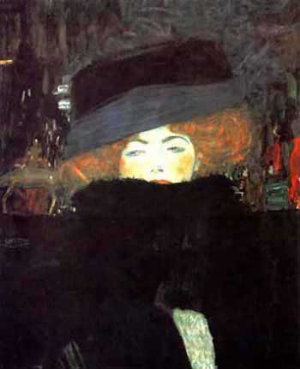
Lost in my thoughts, I jumped when my mom tapped me on the shoulder.

“Should we find a place for lunch next?” she asked with a playful little smile. “You’re in charge, Ms. Tour Guide.”

“Sure,” I said. Wracking my brain for nearby restaurants, not very familiar with the restaurants in the ‘Museum Mile’ where we were; I was annoyed (and surprised) with myself that I had not already planned where we were going to eat.

But then it came to me: the sound of clinking china as we had entered the museum, a warm food-smell (yes, I can smell cooking food from a distance!), and something that had piqued my curiosity when I read a little while ago suddenly emerged from a forgotten recess in my brain. There is a place to eat right in the Neue Galerie – Café Sabarsky, a Viennese café right standing under our feet.

We sat at a small, marble-topped table in the corner of the bright dining room. A piano stood off to the side, smartly-dressed waiters with white aprons tied around their wastes carried shiny trays holding steaming cups of coffee, a tall glass cabinet behind me held dark cakes and light strudels.

“They have sausage!” said Charley with an almost boyish delight, looking at the menu in front of him. “This is so exciting. I love German-Austrian food like this; it’s the best!” He immediately launched into an impassioned attempt to persuade my mom to order a sausage dish as well… “so I can taste more than one!” he pleaded. She was not to be convinced, however.

My mom’s family is from Denmark and she grew up loving foods and certain familiar tastes that are relatively foreign to me now. But for her, they immediately bring back memories of her father (whom I never met, but have heard much about his passion for the kitchen – a love of food is genetic, perhaps?). Pickled herring is one. It had been a while, but always a favorite flavor. After all, she told me in a confiding tone, when she lived in New York City in her late-twenties, she subsisted on only three food groups: pickled herring, cherry vanilla yogurt, and ring-dings. This confession left me shocked into momentary silence (not all food preferences are genetic, I hope?).

But my mom let Charley enjoy his pale-white Bavarian sausage with potato salad on his own, while she ordered an open faced Matjes Herring sandwich with egg, apple, and topped with thin slices of red onion.

“This is my father,” she said, multiple times, smiling as she ate. “It reminds me so much of him…”

“This reminds me of my father, too,” said Charley, gesturing at the unadorned sausages on his plate. My mom started giggling, raising her eyebrows. She's a psychoanalyst; Charley rolled his eyes. “Oh and what would your colleagues have to say about that?” he asked, laughing. I put my hands over my eyes and groaned, lamenting the sense of humor brought out with a bottle of lunch-time red wine and the insuing conversation about certain elements of Viennese cuisine.

I concentrated on my food: a squash soup – thick and vibrantly orange, topped with the crunch of green toasted pumpkin seeds – and a beautiful salad with greens, cornichons and radishes, dressed with a pumpkinseed oil vinaigrette. Charley’s chestnut soup “Viennese Melange” with Armagnac prunes was rich and sweetly nutty.

For dessert we had a Sachertorte and three forks. The sweet, dark chocolate cake with apricot confiture is a classic Viennese dessert and came with a puffy cloud of whipped cream.

We left full, warm, and a little bit tipsy. It was the perfect state to be in on a beautiful weekend afternoon in New York. Art and food each have the ability to bring back such strong sensory memories; I love experiences when they combine. And after ours, we were ready to face the cold and continue on our artistic expedition.
Saturday, January 27, 2007

Flaming Duck Fat

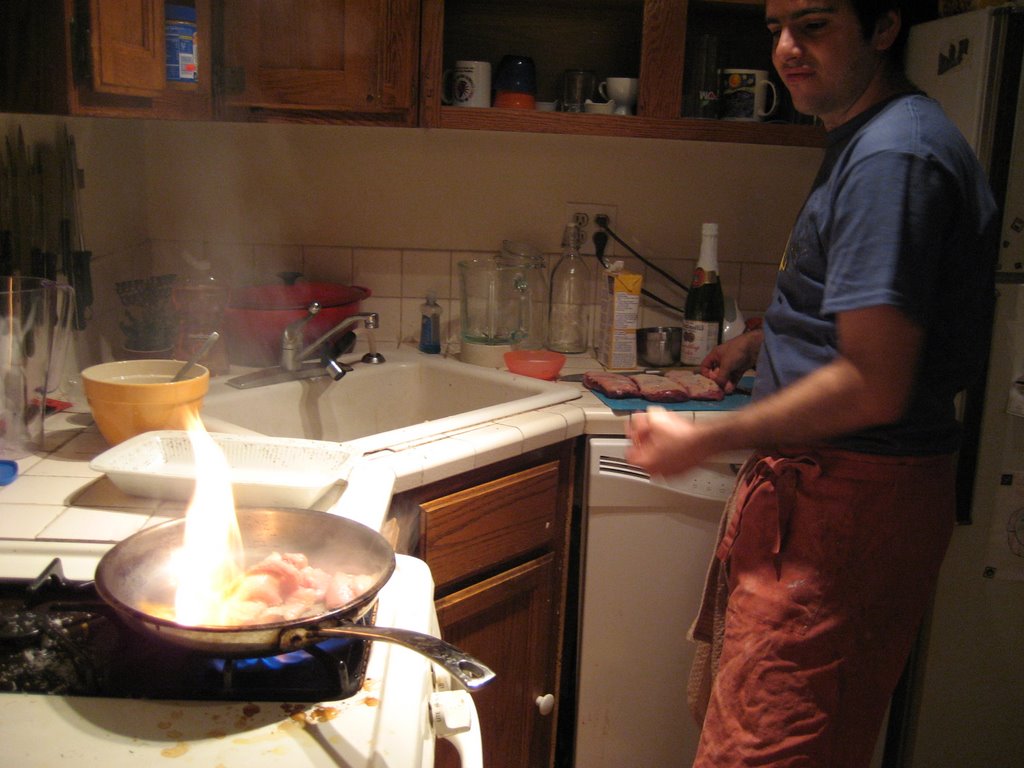
When Ben threw the bulbous lump of white duck fat into the sauté pan there was a pop, a sizzle, and a burst of orange flame.

He stood back for a moment and watched, a little smile playing on his lips.

“BEN!” bellowed his girlfriend from across the room, an audible note of panic. “It’s on fire!”

She stood next to me in the center of the kitchen and we stared at the flaming pan. I never knew rendering duck fat could be so thrilling.

“I don’t feel comfortable with this,” she said.

Ben’s orange apron was tied akimbo around his waste; flour dusted his navy blue T-shirt. “Ok, ok,” he said, “I’ll turn it down.” With a crank of the knob the flame soon disappeared, and we were left only with a melting puddle of duck fat – the crisp left-over brown bits (“duck cracklin’s!” he exclaimed) floated in the bronze-tinted liquid.

We were in the middle of an afternoon of cooking. An afternoon that extended into an evening—what felt like the shortest seven hours I’ve ever spent in a kitchen—and resulted in one of the most exciting, interesting dinner parties in which I’ve taken part.

I have been running around like crazy in the past few months—a heady combination of work and play—and a day in the kitchen was just what I needed.

(Thank you, on a side note, to those who emailed to see if I have been OK. I’ve been a negligent blogger, but things have finally calmed down—grad school application finished!—and I’ll now have more time for my own writing. Already I am sitting on a backlog of cooking experiences to relate… improvised chocolate cake, a dinner party centered around Hungarian paprika, a return to baking my ‘famous’ apple pie.)

But I digress. Flaming duck fat was just a moment in this cooking extravaganza embarked upon with my friend Ben, as we did a run-through of a menu we have been talking about for a long time. We are in the process of planning a small “restaurant” gig—dinner for 10 or 15 people sometime in the near future, with a minimal charge and a deluge of seasonal small plates at Ben’s apartment in Brooklyn.

Ben is an extremely talented, self-taught chef who sidelines as a writer and teacher, and is known for his intricate, creative cooking. At many a Sunday evening dinner get-together I have seen jaws drop in awe as his creations are deposited on the kitchen table in the bright, cozy apartment he shares with his girlfriend.

For our current project Ben is Chef. I don’t have a whole lot of insight to bring to his already wonderful savory creations—unless, that is, you count a very dedicated hand at chopping shallots or cucumbers, slicing kumquats or squeezing the juice out of blood oranges. Which is why I am Pastry Chef. Especially without a full sense of smell (necessary in the constant tasting and experimentation of a savory chef) the science and calculation of baking is where I excel. The loss of my sense of smell (which I have written extensively about) has given me a new sense of the oven—one that relies on measurement, texture, and the visual rather than scent and the intricacies of taste. And, if I do say so myself, I bake beautifully.

A dusky, cold evening last weekend Ben and I brought our menu into existence for a few friends, charged only with a promise to give constructive criticism.

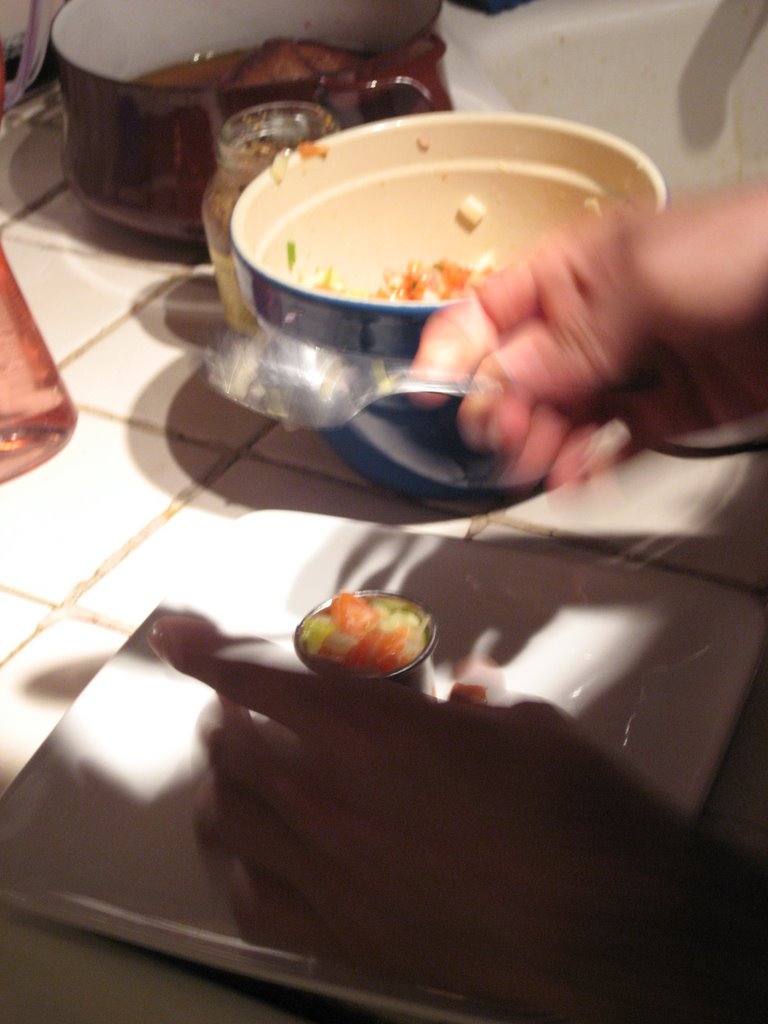
Dinner began with a tartar: stacks of vibrant pink salmon, streaked with soft lines of white, was combined with the green crunch of apples, endive and cucumber. Topped with a cool drop of sour cream and a sprinkling of chives and surrounded with streaming lines of lemon zest and grainy mustard, it was combined by the diner’s fork.

A bronzed cauliflower soup steamed and burbled on the stove before it was plated with a dollop of sweet and sour raisins, a stream of green fennel oil and toasted macadamia nuts. “Oh wow,” said my friend Adrienne as she ate, “this is damn good.”

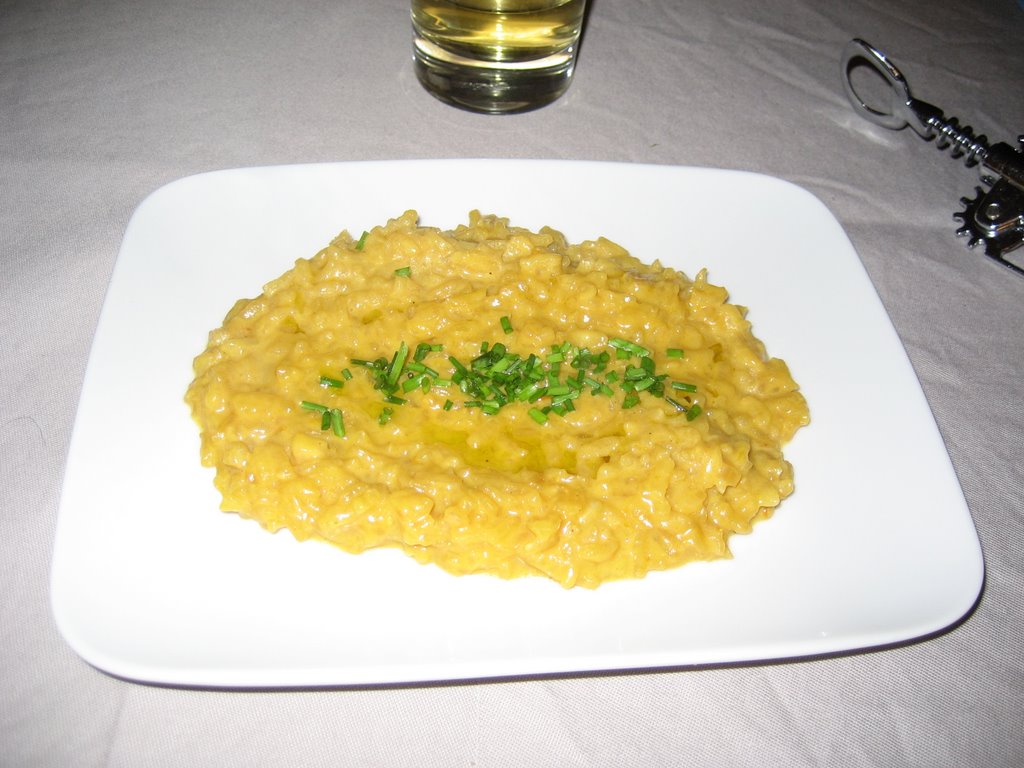
Next was a saffron risotto – a burnt-orange hue, it was laced with cheese, butter, the nutty and surprising hint of soy milk. It was rich and soft, punctured with the green of cut chives, but “there is something off,” said Ben, forever the perfectionist. “It’s not incredibly interesting… Perhaps a combination of two risottos for the final,” he mused. “Blueberry risotto. Maybe mushroom.”

The duck breasts, which we had seared earlier in the evening and let sit in their (once flaming) rendered fat until just before service, were tender. We cut them into delicate, moist slices and served them next to a small salad of cucumber and candied kumquat, drizzled with a vibrant blood orange glaze. “Nothing makes a great duck like a few hours hanging out in its own fat,” said Ben.

It was a half hour later—after a few deep breathes of digestion and the requisite “I can’t believe tomorrow is Monday and I have to go back to work” speak—that the timer rang and I removed my finale from the oven.

Individual molten chocolate cakes, baked in small globular soufflé cups, were nestled on plates next to blue china spoons that held a rounded scoop of light brown ice cream. Salted Caramel Ice Cream: quite possibly the most delicious thing on the face of the earth with its cool, understated sweetness and a backhand tang of salt. Molly of Orangette first clued me into its existence, and with her recipe, my ice cream maker, and a sprinkling of fleur de sel on top, it complimented the cake perfectly. Salty to sweet; hot to cold. There was silence around the table as our spoons clinked in unison.

(The only picture I have was taken the next day, with one of the leftovers, as I was too distracted with the act of eating to use my camera at the time...)

I’m not sure exactly when Ben's and my “restaurant” will come to pass – recipes need tweaking, tables need renting, details need finessing (if anyone has any tips, ideas, or interest in joining us, please email me). The act of creation itself, however, has been an inspiring challenge. And, to echo Adrienne, “pretty damn delicious.”

The dinner party resulted in a late night and the streets were dark and empty as I walked from the subway to my apartment, a scarf wrapped around my face and the a bite of wind hinting that this late winter freeze may indeed arrive. I felt full and tired, yet buoyed up with the knowledge that I can still cook. The kitchen still beckons. There are happy culinary projects looming.

***

I was sleepy the next day when, perched at my desk, I tried to make sense of the words winking at me from my computer. It was not long, however, before the Tupperware container holding a small left-over cake popped right out of my bag (10am is prime dessert time, I say). Combined with a very large coffee, I've discovered, individual molten chocolate cakes can make the trying times of an office on a Monday morning shockingly pleasant.

Saturday, December 9, 2006

The Mute Sense

The first line I read when I picked up the New York Times on Wednesday morning, smack in the center of the Dining and Wine section, was in an article by Harold McGee.

"Last week I went to Stanford University to hear a lecture on the molecular biology of smell," he wrote, "and then drove home buzzing with thoughts about what it might mean for people who love to eat."

As I read, standing by my kitchen table in a pair of bright yellow slippers and an old white T-shirt, a dark knob of anxiety immediately began to throb in the pit of my stomach. An immediate, physical reaction to seeing 'smell' and 'eating' in the same sentence, I had to put the paper down and remember to breathe for a moment before I could look at the words again.

The article was not really about smell and its relationship to food—the subject which inspires such a visceral reaction—but was more of an introduction by the author to a column that will appear on occasion in the Dining section of the paper. McGee writes about the science of food and, is known for his book On Food and Cooking, and is highly revered in the culinary world (the Chef for whom I once worked would often say, “In the kitchen, McGee will change your life”).

But with the jolt of that first line, I realized how afraid I have been of knowing more about the effects of my loss of smell. It has been 16 months since I lost the majority of my sense of smell in a car accident and while it was easy to research the immediate effects at the time and write about the day-to-day of recovery ever since, it has become increasingly difficult to look at the long term.

For example, I have been "reading" Diane Ackerman's A Natural History of the Senses, for over six months now. A narrative collection of essays and stories on the five senses, it has been constantly perched on the top of one of the mounds of books in my over-crowded room, 'always next' on the list to be fully tackled. It has accompanied me on many subway and train trips, tucked neatly into my bag with every intention of reading but hardly ever done. It even spent a night flapped open over my face when a late reading attempt brought sleep before I had a chance to either turn off the light or place the book to the side. It begins with a chapter on smell and each time I flipped it open I could feel lines of panic snaking up my legs, stomach, resting in the back of my throat. I always had to put the book down immediately.

The problem for me is that Ackerman writes beautifully and effectively about smell—in language laced simultaneously with poetry and science. She ties smell to pleasure, memory, language, literature, history, sex… all things so intrinsically bound to life. And reading about what I have lost makes it that much more real. If I don’t read the book or the chapter or the article, my subconscious tells me, perhaps I won’t have to face what may potentially be gone.

But after having such an adverse reaction to the Dining section of the paper, generally the best part of Wednesday morning, I decided that enough is enough. I can’t hide from it forever—especially since scent-related writing has been recently getting more attention. Chandler Burr was named the New York Times Perfume Critic; Patrick Suskind’s well-lauded novel Perfume, a book about a murder and a man with an inhuman sense of smell (lying unread, of course, on a pile of books in my room) is soon to come out as a movie; and in last Sunday’s Times Book section there was a review of Luca Turin’s The Secret of Scent, a more scientific look at the theories of olfactory perception and the world of perfume makers. And so Wednesday night after work I sat myself down with Ackerman and fully made my way through the chapter on smell. It wasn’t very hard in the end—perhaps because my sense of smell has been consistently sloughing its way toward recovery (body odor at the gym! toasted almonds at thanksgiving dinner! sautéing garlic from three rooms over!) or, simply, that I have more faith in its future. Its return is a mysterious and interesting phenomenon—one intertwined with all that Ackerman writes of, a delicate reassertion of memory, language, and pleasure. And it’s one that I want to more fully understand.

It’s difficult to write about scent. As Ackerman says, it is the ‘mute’ sense—“…extraordinarily precise, yet it’s almost impossible to describe how something smells to someone who hasn’t smelled it.” Metaphor is ubiquitous—in The Secret of Scent (which arrived on my doorstep from the gods of amazon.com yesterday), for example, Luca Turin describes the scent of a perfume, Nombre Noir, as having the voice “of a child older than its years, at once fresh, husky, modulated and faintly capricious.” And it’s very easy to fall into the chasm of noxious purple prose (“It seems possible that a good few potential readers of The Secret of Scent will send the book windmilling across the room as soon as they encounter Nombre Noir,” says the Times review on Turin’s description). But when done well, the description of a scent can be as transportive as the smell itself. In Swanns Way Proust describes a moment of his day:

I would turn to and fro between the prayer-desk and the stamped velvet armchairs, each one always draped in its crocheted antimacassar, while the fire, baking like a pie the appetizing smells with which the air of the room was thickly clotted, which the dewy and sunny freshness of the morning had already “raised” and started to “set,” puffed them and glazed them and fluted them and swelled them into in invisible though not impalpable country cake, an immense puff-pastry, in which, barely waiting to savor the crustier, more delicate, more respectable, but also drier smells of the cupboard, the chest-of-drawers, and the patterned wall-paper I always returned with an unconfessed gluttony to bury myself in the nondescript resinous, dull, indigestible, and fruity smell of the flowered quilt.

When I read that passage I am immediately there, lost in the scent of Proust’s words. I may have lost the ability to wholly experience my own world of smell. But, in coming to terms with the slow and unsure process of recovery, I’m happy to yet again be able to step into that of others.

Sunday, November 19, 2006

On Becoming a Muffin

I think that am turning into a muffin.

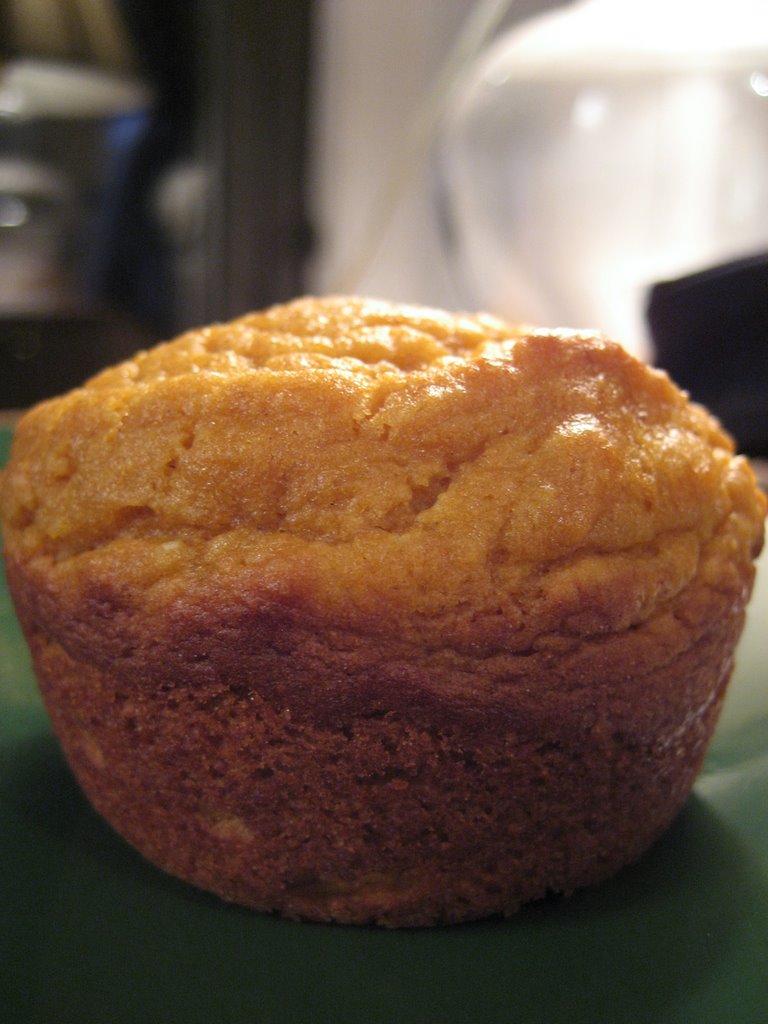
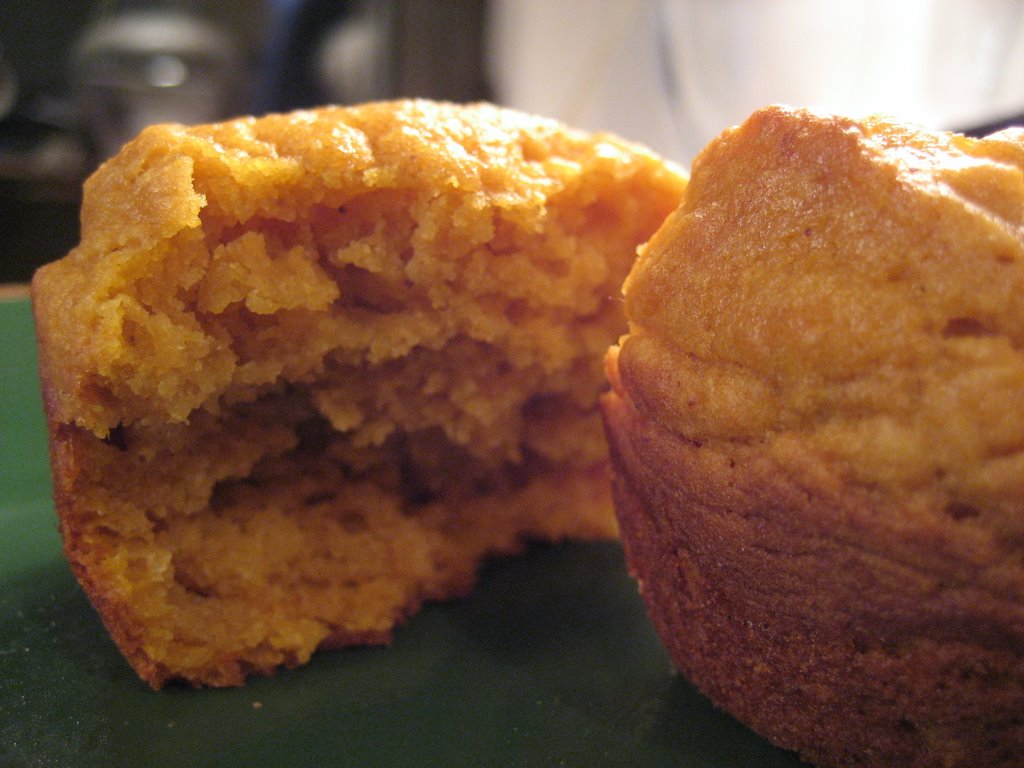
I baked a plump batch of pumpkin muffins three days ago and now my muffin-consumption frequency has officially reached a dangerous level. In fact, as I made my way out of my apartment last night (after my fourth muffin of the day, yes) I glanced in the mirror and I’m pretty sure I could see the beginning traces of a pumpkin-orange hue emanating from my skin.

I am in the midst of a baking kick. It began a few weeks ago with a dinner party and an almond cake, moved along to bread, some batches of oatmeal cookies, and has now landed in the realm of muffins.

Perhaps this baking spree has something to do with the cooler weather, the encroaching holiday season. I love when my oven is full. And baking, comfort, home – they are all intertwined.

Or perhaps it is more of this anniversary syndrome. One year ago, after all, I was working at the Bakery, hammering out apple pies and chocolate babka in the hectic ambush of Thanksgiving orders. When I got home each night my hands, despite numerous washings, felt constantly encased in a thin film of butter and phyllo dough. My lips always tasted of sugar. Those long hours I spent hunched over a large wood table in the bakery kitchen, carefully tracing lines of colorful frosting onto turkey-shaped sugar cookies are now speaking to my culinary subconscious.

This year I have yet to bake anything resembling a barnyard animal, thankfully, as that would be truly troubling. And despite my initial worry, I believe these vivid orange muffins – light, cakey and moist; with a subtle layer of sweetness – are worth the risk of over-consumption. If you had to transform into some non-human thing, I think that they are an excellent choice. I suppose as a pumpkin muffin you wouldn't be able to turn the pages of the book you're reading, ride a bike in the park, or see over the seat in front of you at the movie theater. But, no matter what, you would be an excellent companion to a steaming mug of ginger tea, a bit of Miles Davis, a rainy evening, and a writing project to complete at my desk.


Pumpkin Muffins
adapted from Gourmet Magazine, November 2006

1 1/2 cups flour
1 teaspoon baking powder
1 cup canned solid-pack pumpkin
1/3 cup canola oil
2 large eggs
1/2 teaspoon cinnamon
1/4 teaspoon nutmeg
1/4 teaspoon allspice
1/4 teaspoon ground ginger
1 cup sugar
1/2 teaspoon baking soda
1/2 teaspoon salt

-Preheat oven to 350 F.
-Whisk together flour and baking powder in a small bowl.
-Whisk together pumpkin, oil, eggs, spices, sugar, baking soda and salt in another, larger bowl. Once smooth, whisk in the flour until just combined.
-Butter a muffin pan and divide the batter evenly into each inlet (should make 12 muffins).
-Bake for 25-30 minutes, until puffed and golden. A toothpick stuck into the center should come out clean.
-Let rest in the pan for five minutes, and then take out the muffins and allow them to cool on a rack until at room temperature.

Sunday, November 12, 2006

Bread that Needs no Kneading

The streets were always empty in the chilly pre-dawn hours as I drove to the bakery. The headlights of my car illuminated the street signs, the highway's concrete divider, the brambled bushes lining the back roads. Every morning the radio quietly hummed the news, a metal carafe of coffee steamed in the cup holder by my side, sleep lay heavily in my eyes – I felt as if I were the only one awake.

It was the summer before my freshman year of college and I was working as an assistant pastry chef near my home in suburban Massachusetts. I stumbled into the job not knowing much - my first experience in the professional food world - and left with an ingrained set of culinary skills that have stuck with me ever since. I frost a mean cake, let me tell you.

When I walked into the bakery around 5am each morning, the day’s crop of bread was just emerging from the oven. A result of the night baker's toil, the boxy brown loaves cooled on movable metal shelves until the front doors opened to customers at 7. The muffins and croissants would soon go into the oven, along with the cakes and pastries and scones. The construction of sandwiches and soups was imminent. But at that first moment, right when I arrived and stood talking to the head baker about the day’s work, another cup of coffee cradled in my hands, the room was filled with the scent of pure, unadulterated, overwhelming bread. It was an important part of my daily routine and I loved its warm, sweet aroma - the earthy undertone of yeast. It smelled of the sunlight peeking slowly through the bakery’s window as the day began; the taste of chocolate cake; the feel of puff pastry dough; the fear that lurked constantly in mind with thoughts of my impending college career. It was a scent that made those very early mornings worthwhile – and for a time in my life when I was not so overly food-obsessed and was often out late at night with my high school friends as we shook off those last vestiges of childhood – that says a lot.

When my sense of smell was damaged in the car accident, about 14 months ago now, it was incredibly difficult to come to terms with some of the specific aspects of that loss. The scent of fresh bread being one of them. As my olfactory nerve has healed, certain scents that mean a lot to me have come back with relative haste – rosemary, chocolate, wine – but bread had yet to reemerge.

Yesterday, however, I sat at my kitchen table with a good book (Mark Helprin’s Freddy and Fredericka), a mug of tea (green-ginger), some good music (Elvis Perkins, a recent discovery) and I could not stop sniffing the air. Like a great many others, I had been inspired by a recent recipe in the New York Times: the Sullivan Street Bakery’s no-knead bread. It was in the oven and my apartment smelled like the bakery – sweet, nutty, warm. There was even, perhaps, an undertone of puff pastry and sunlight.

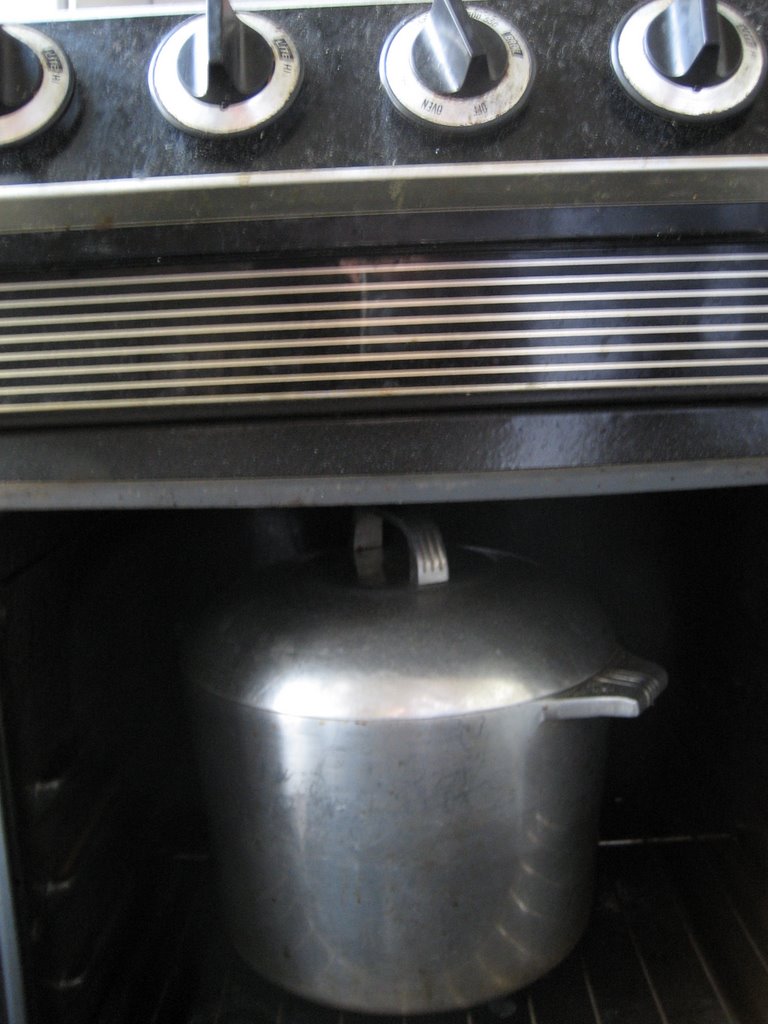
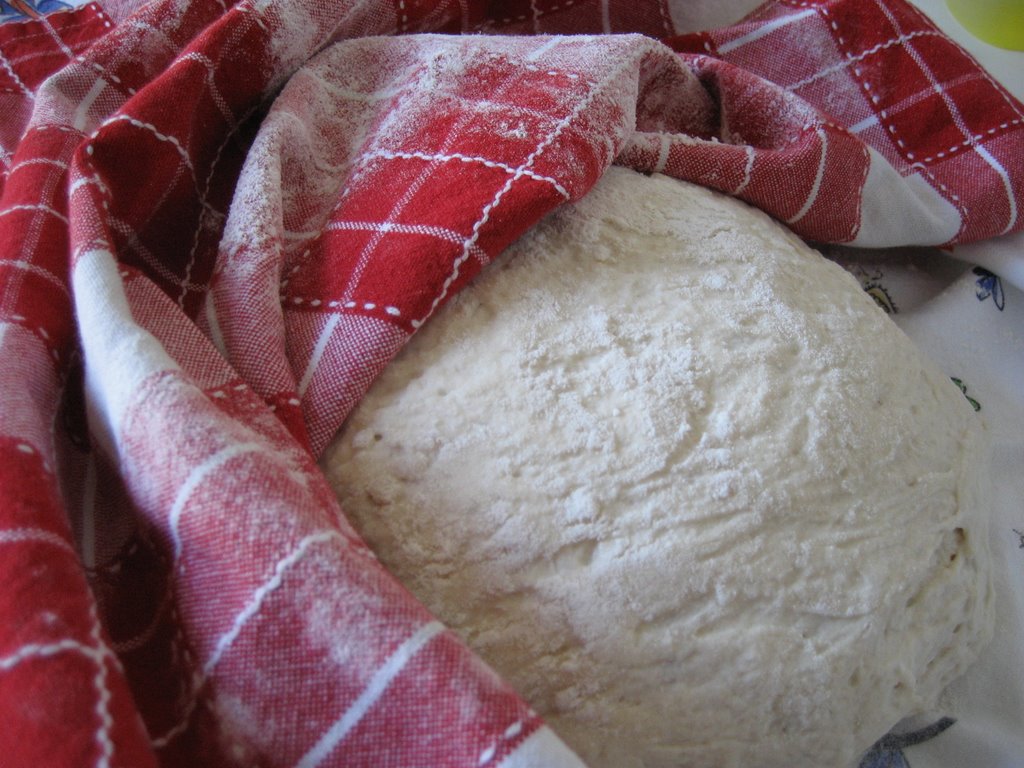
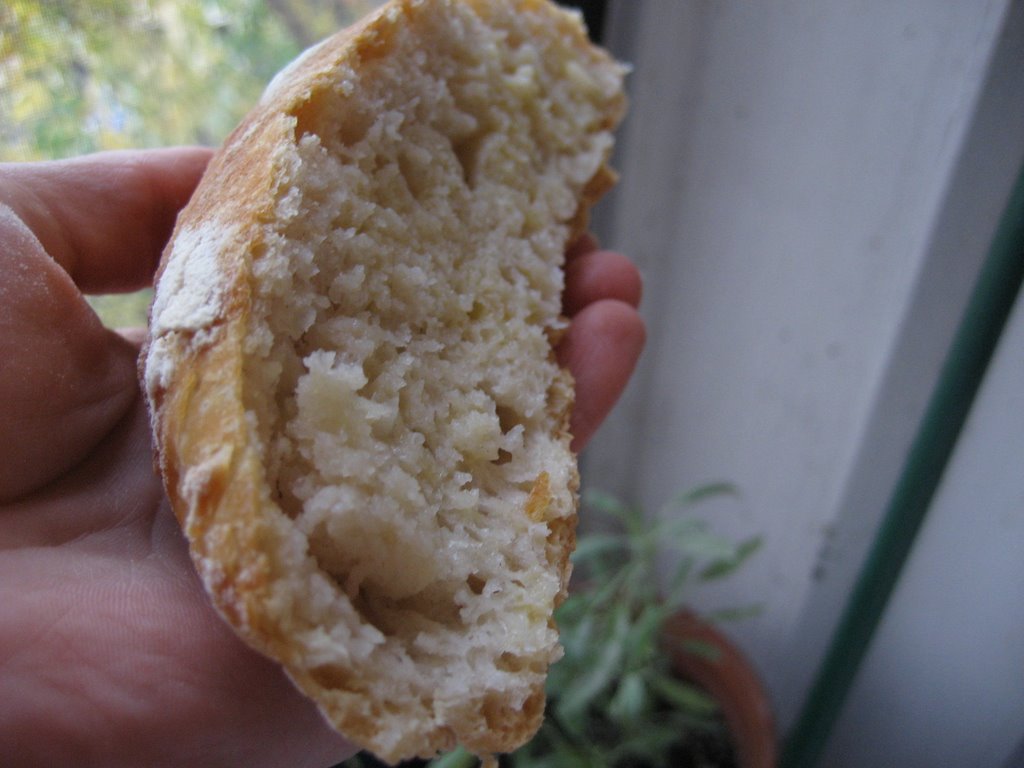
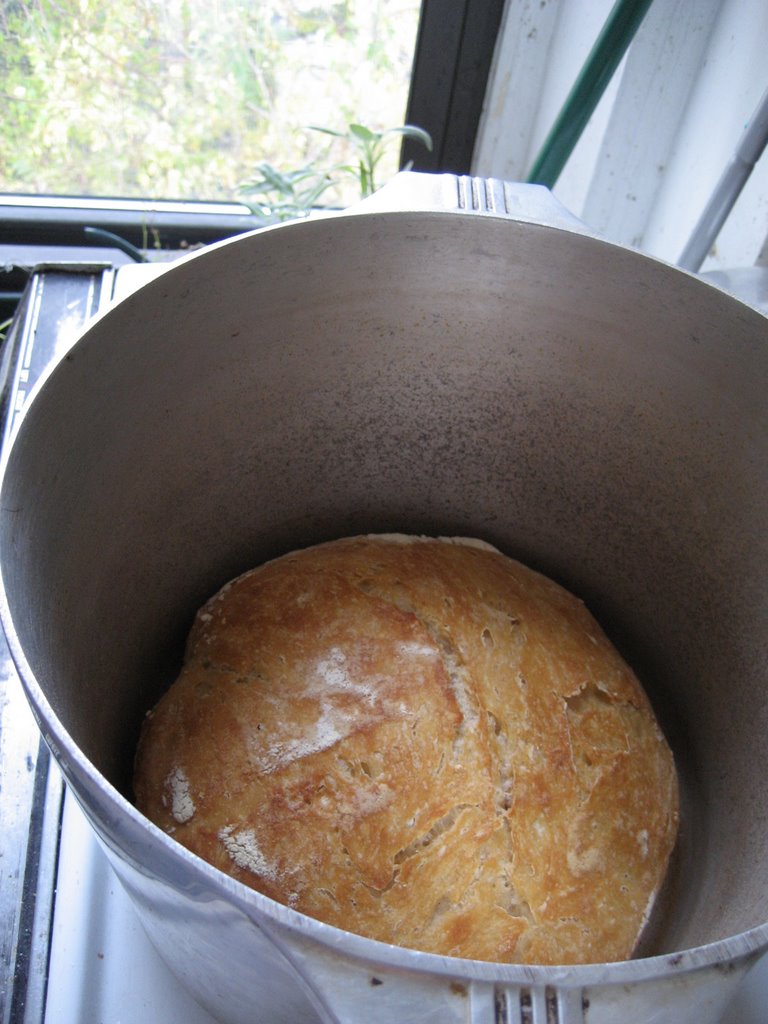
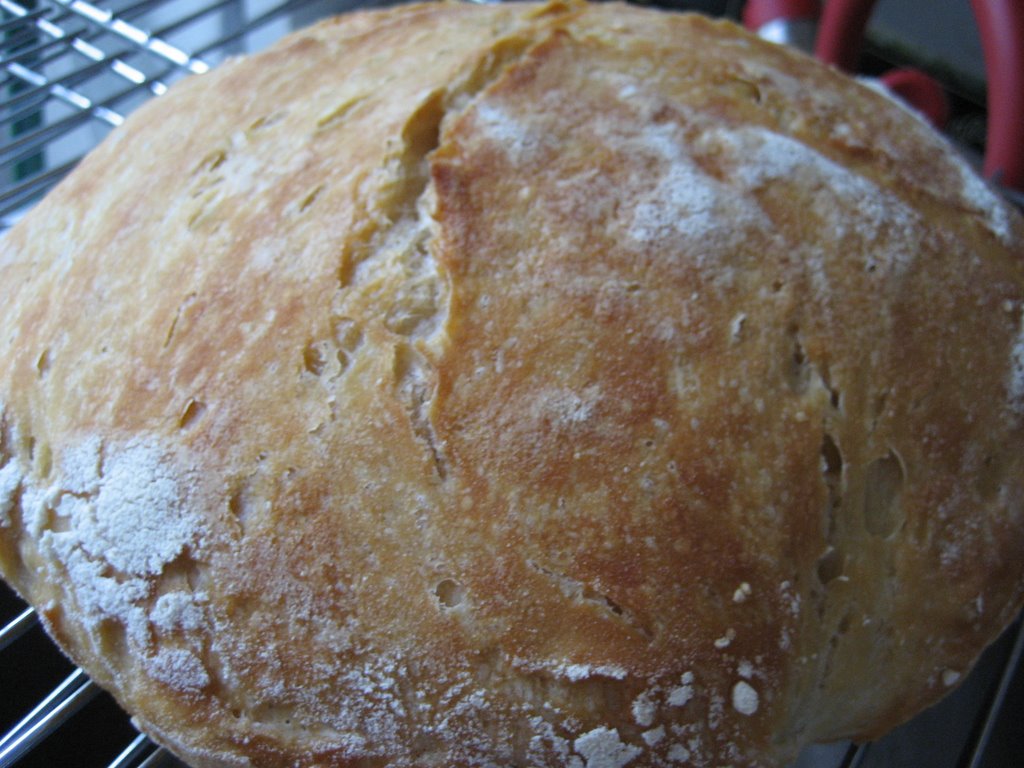
The bread itself was shockingly easy to make. On Friday I had tossed some flour, water, yeast and salt into a bowl. Saturday afternoon I threw it (in a pre-heated, covered, cast iron pot) in the oven. And when I removed the it 50 minutes later, there was a beautiful, crusty brown loaf. I cut myself a large slice (not waiting nearly long enough for it to cool... I have very little patience in matters of tasting freshly baked things), slathered it with butter (Lurpak is delicious) and took a bite. It was damn good. For half of its baking time the bread is sealed in a heavy pot and with the steam amassed, the ending texture is wonderful - crackling crust on the outside, soft and fluffy within.

The easiest recipe I have ever come across produced some of the best bread to ever exit my oven. The world works in strange ways.


photos above: the final rising of the dough; my oven swallowing the pot of bread as it baked below: bread in a pot; bread in my hand.


***


On another note:

One unseasonably warm day last week, as I walked from my office to the subway in midtown Manhattan, I passed a large pile of trash bags. They were full, stacked on top of each other on the sidewalk, and waiting for the garbage man to take them away. As I maneuvered around them I was suddenly overwhelmed by scent. It took me a moment to recognize what, exactly, I was smelling. (It’s been over a year since my olfactory receptors could register anything unpleasant…) But I stood still for a moment, my nose twitching as I sniffed the air. The stench of rotting trash will probably never again bring such a joyous smile to my lips.

Saturday, November 11, 2006

Nothing Better than a little Chocolate with your Chorizo

On Thursday night I met my friend Becker on the expansive sidewalk outside of a busting Chelsea restaurant, Tia Pol. A well-lauded Spanish tapas establishment, its name immediately jumped to mind when deciding where we should eat - in part through Luisa's recent inspiration, but I have also eaten there once before and knew that in this protracted work week (one that screamed for recompense in the form of good food) Tia Pol would not disappoint.

It didn’t.

Becker and I stood perched in the narrow space between the bar and the brick-studded wall – it is a small restaurant, a long snaking hallway studded with tall tables and a semi-open kitchen to the side – and sipped some Rioja (chosen from their all Spanish wine list) as we waited for a table. The room was dimly lit yet colorful with movement and laughter. We could hardly hear ourselves speak through the din of happy diners.

We were brought to sit, a half hour later, at a small table nestled against the brick siding, across from the kitchen. A highly set window carved into the wall gave the view to an “open" kitchen and throughout the meal I watched a bobbing mop of dark hair and blue and white polka-dotted bandana that belonged, I could only assume, to one of the chefs. Every so often steaming plates of food would pop up onto the window’s ledge, to be quickly whisked off by a waiter or waitress. Alexandra Raij, a graduate of the Culinary Institute of America, and her husband, Eder Montero, who once worked for Ferran Adria in Barcelona, man the kitchen - a job that they found advertised on craigslist - and now produce Iberian-inspired tapas with high quality ingredients to a constantly flowing crowd.

The service of our own (handsome) waiter was friendly and attentive – a list of specials was spouted glibly, and Becker and I were left to the difficult decision of what to order.

We began with a plate of roasted green peppers – small and posed for one-bite-consumption by holding their dangly long stems - they were browned with heat and covered in olive oil and salt. There were the aceitunas tia pol - black empeltres, manzanillas, arbequinas: bowl of assorted olives, a mottled variation on browns and greens. And pinchos morunos - skewers of succulent pieces of lamb, their flavorful juices absorbed by thick slices of French bread into which they were stuck. The taquitos de atun relleno de boquerones was beautifully plated - a little row of geometrically aligned color - chilled slices of seared tuna, stuffed with marinated white anchovies and topped with what looked like a tiny dollop of olive paste, perhaps, and two small slices of red and green pepper. With concentration we could taste the anchovy – the peppers were overwhelmed by their salt however, and, we thought, could have used some spiciness to round out the flavors.

My favorite, by far, was the chorizo con chocolate – small slices of white bread laden with a melted swipe of thick bittersweet chocolate. Spicy, rich chorizo (a Spanish sausage) was balanced above, topped with a sprinkling of saffron. The flavors combined so surprisingly well that Becker and I had a moment of silence in order to concentrate fully on taste. To top it off we split a warm almond cake – sweet, nutty, and moist.

In the end I was, to say the least, very full. But very happy. And already planning what I will eat the next time around…

Thursday, November 2, 2006

Balzac's Beets

Last Friday after work I met Jon in Bryant Park and we walked through a cool drizzle to the Museum of Modern Art. It is open late on Fridays, free, and always filled with interesting people to watch.

The statue of Balzac that looms in the front hallway of the museum is an old friend. He is larger than life, a study of thick ridges and cavities. Leaning slightly back, his craggy dark head faces upwards, looking beyond the museumgoers that pass below. Swathed in a robe of cast bronze, his dynamic presence lacks detail but makes up for it with a raw sense of movement. Haughty and thoughtful, he oozes what I have always considered a sensual intellectualism. If it’s possible to have a friend-crush on a hunk of inanimate material, well, then I do.

There is a lot of art – art that I have loved my whole life, art that I concentrated on while studying it in college – that is just so familiar, so often viewed, and so engrained into my visual memory that even their basic color palettes are comforting. Some of it resides in MoMA, much of it does not. Monet’s windblown haystacks… a seductively lounging Tahitian woman of Gauguin’s… a few frank portraits that Cezanne did of his wife… the pointed, mechanical brush-dots of Seurat… a certain Filippino Lippi painting in front of which I spent hours while living in Florence. Auguste Rodin’s Monument to Balzac.

At the museum Jon and I circled around the bronze Balzac for a few minutes; I wanted to say hello. We walked up through the special exhibitions and briefly visited some Warhol, Jasper Johns, Robert Rauschenberg. It was a short visit, but intimate all the same – like catching up with an old friend over a good cup of coffee.

Afterwards, when hunger and exhaustion pushed us far from any sort of abstract expression, Jon and I emerged from the F train a good ways downtown. It was pouring; I had no umbrella. With my scarf wrapped (a bit grumpily, I’ll admit) around my head, we quickly walked up 2nd Avenue until we arrived at our destination. We landed ourselves at Veselka, Manhattan’s bastion of Ukranian food, and a restaurant that we had been talking about going for a long time. Veselka, after all, is known for its borscht. And for two people who have been known to roast multiple batches of beets on days of searing 90 degree heat in an apartment with no air conditioning, good borscht is something in which to invest some quality time.

We sat at a rickety little table by the window and soon had large bottles of the local (and by local I mean Ukranian) Obolon beer in our hands. When the steaming bowl of vibrant purple soup was plunked down in front of me I shed the last vestiges of my frizzy-haired bad mood. It was thick, rich, and hot – filled with that sweet, earthy beet flavor. A familiar, favorite taste, done right.

In addition, there were the seasonal pumpkin and farmer’s cheese pierogis, Jon’s of hearty ‘Bigos’ stew – consisting mainly of meat (a mixture of kielbasa and pork) with some sauerkraut and onions thrown in the mix (“a substantial meal, fit for a hunter,” the menu said) – and an oozingly sweet apple crumble. The pierogis were a bit bland and the stew a bit too hunter-esque for my taste. But the dessert hit the post-borscht spot just right. In general, everything from the food to the service was homey, low-key and warming.

It was a comforting, familiar evening of art – both fine and culinary. And sitting at the table in the brightly lit corner of Veselka, listening to the rain come sloughing down outside, it seemed fitting when a large, older man stepped into the restaurant, a thick book tucked under his right arm. Swathed in a flowing red robe, his long gray mustache and beard cascaded down the front of his chiseled face. He peered around the room –a haughty yet noble gaze – and I could see a light of recognition when his eyes landed on Jon and me. He moved slowly towards our table, ignoring the raised eyebrows of pink-haired hipsters as they conspicuously judged his outfit. Sitting heavily down at the empty seat to my right the man sighed gruffly, brushing the rain drops off of his shoulder. He glanced haphazardly at the menu and then turned around to catch the eye of our waitress as she walked past. Flipping open her notepad, pen poised, she asked, “What can I get ya?”

And in a stilted, thick French accent, my friend Balzac said, “I’ll have the borscht, please.”